
1 in 8 men will be diagnosed with prostate cancer
Early detection is key
When detected early, prostate cancer is one of the most successfully treated types of cancer.

Where is the prostate?
The prostate is a small walnut shaped gland in men below the bladder and in front of the rectum, which produces the seminal fluid that nourishes and carries sperm.
What is prostate cancer?
Prostate cancer occurs when cells in the tissues in the prostate begin to grow abnormally and lose their normal function. Some prostate cancers grow and spread slowly, while others grow and spread quickly.
What are the symptoms?
Prostate cancer may not cause any signs or symptoms in its early stages. Signs and symptoms often appear as the tumour grows and causes changes in the body such as changes in bladder habits. Other health conditions can cause the same symptoms as prostate cancer.
What are some risk factors of prostate cancer?
Age: Prostate Cancer is uncommon in men under 50 years of age and is most often diagnosed in men over 65.
Family history: Your risk of developing prostate cancer increases if you’ve had a close family member who has had prostate cancer.
Ancestry: Although the reasons are unclear, men of African ancestry may be at greater risk of developing prostate cancer than Caucasian men, and the risk is lower in men of Asian ancestry.
Diet: A diet that includes high-fat foods, particularly animal fats, may increase the risk of prostate cancer.
Chemical exposure: Exposure to metals such as cadmium or to farm pesticides may increase the risk of developing prostate cancer.
What does the PSA test measure?
The PSA test measures the level of prostate specific antigen in your blood. High levels of blood PSA can indicate the presence of cancer in the prostate. However, there are many reasons why you might have a high PSA level that have no relation to cancer. In fact, only 1 in 4 men with high PSA levels have prostate cancer.

Get Screened Today
Are you a man 40 or older? The first step is to talk to your healthcare provider. The Canadian Urology Association (CUA) suggests having a discussion with your healthcare provider about whether PSA screening and alternative tests are right for you.
Prostate Cancer Screening Journey
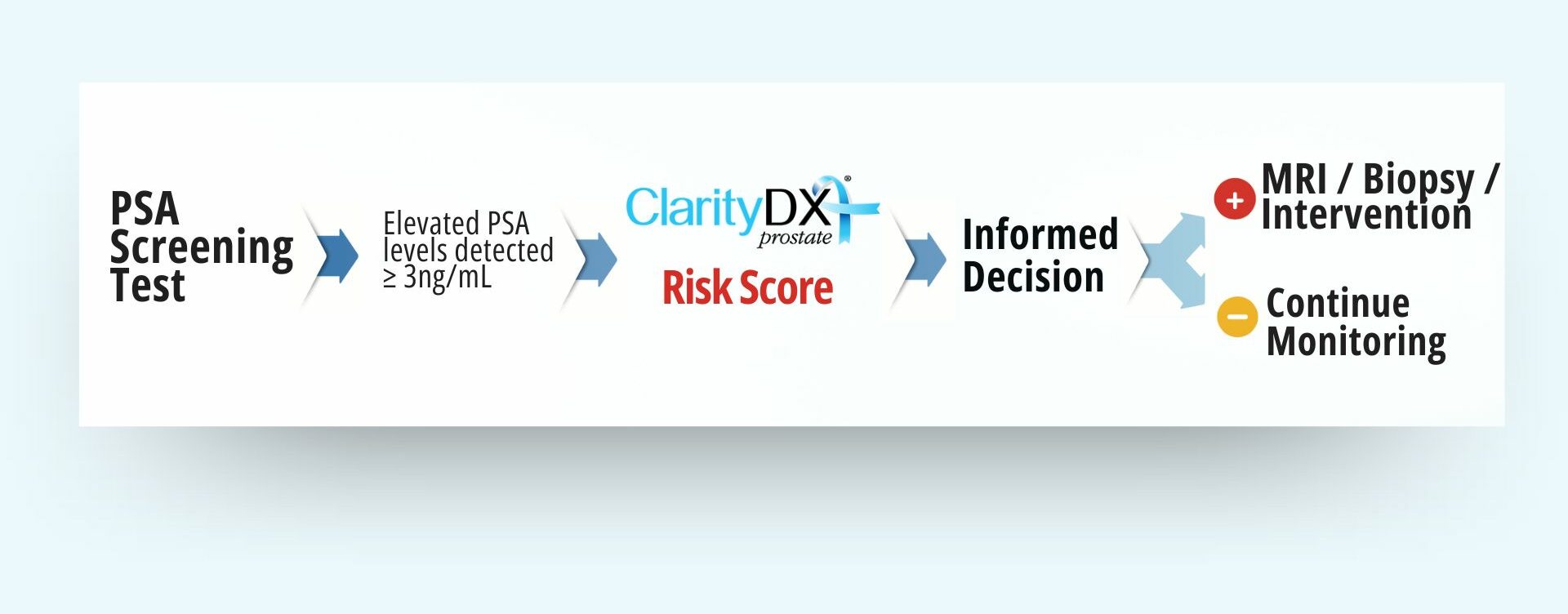
ClarityDX Prostate may be right for you.
ClarityDX Prostate gives you and your healthcare provider more information about what your elevated PSA levels mean and whether to have a prostate biopsy done or to continue monitoring PSA levels instead. Patients with suspicion of prostate cancer (i.e., elevated PSA levels and/or abnormal DRE) and without a prior diagnosis of prostate cancer are eligible for ClarityDX Prostate.

Patient Stories