
Articles

Alberta Health Innovation Passport: ClarityDX Prostate reduces unnecessary biopsies and improves patient outcomes

HealthPro Canada Alberta Health Innovation Passport – Nanostics

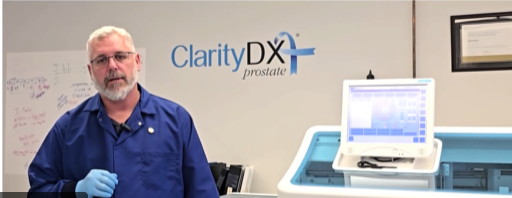
Dr. Desmond Pink, Co-founder & CSO of Nanostics, speaking about Nanostics’ ClarityDX Prostate test. Click here to watch the YouTube video.

Category: Software as a Medical Device (SAMD) for early detection of prostate cancer

Overview: Nanostics, a precision diagnostics company, uses its AI-powered ClarityDX platform to predict disease. Its internationally validated lead test, ClarityDX Prostate, reduces unnecessary biopsies and improves patient outcomes. Commercially available across Canada, “the test puts patients in a leadership role [in their healthcare journey],” explained an Albertan patient.

System Benefits:

  • Reduces 47% of unnecessary prostate biopsies, resulting in system savings of $258,250 per 1,000 men with elevated PSA levels
  • Eliminates biopsy caused side effects like sepsis, incontinence, erectile dysfunction and anxiety
  • Accelerates accurate diagnosis with AI-driven risk assessment
  • Expands access through scalable lab/SaaS delivery models
Edmonton Global Trade Heroes Series – Nanostics’ ClarityDX Prostate early diagnostic test for aggressive prostate cancer

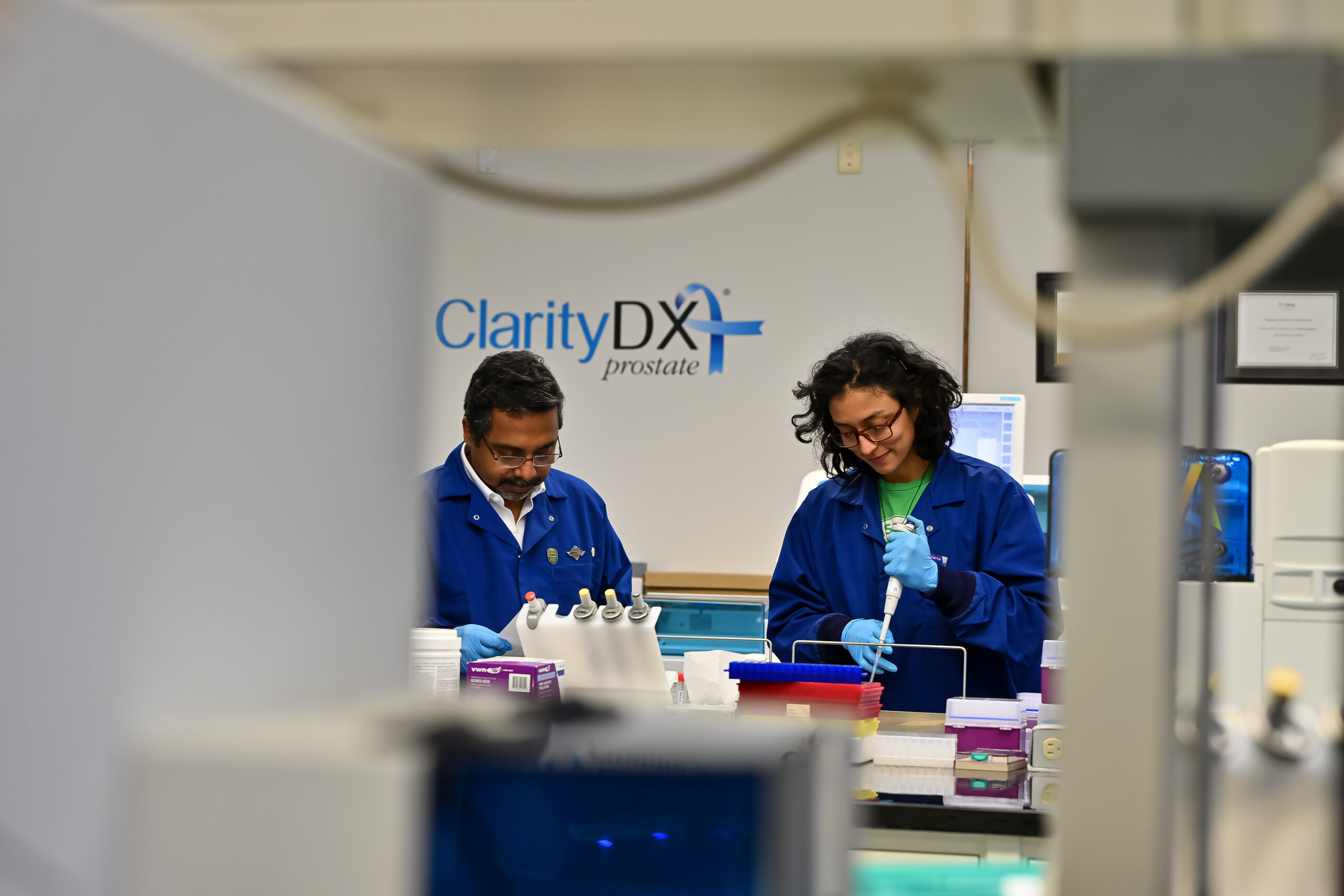
Nanostics Clinical Laboratory. Photo credit: Adam Becker, Intercept Photography

The “Trade Heroes” series highlights Edmonton region companies who have ‘EXPORT-itude‘ — By Amanda Sparks at Edmonton Global.

22% of all new cancer cases in Canadian men are prostate cancer; and when it comes to prostate cancer, early detection saves lives. Since its founding in 2017, Edmonton region-based health tech company Nanostics has been working to make its early prostate cancer detection test available across Canada, the United States, and the Middle East.

“My goal from the very beginning of my career was to try to make an impact on human disease, specifically in cancer,” John Lewis, co-founder and Chief Executive Officer of Nanostics, said.

That vision sharpened as John and his team began tackling one of medicine’s biggest diagnostic gaps: prostate cancer. “Prostate cancer that stays in the prostate is pretty much 100% curable,” he explained. “But if it spreads, it’s a deadly disease.”

The standard screening tool is the prostate-specific antigen (PSA) test. The PSA test, while widely used, is not ideal, John explained. “It really is one of the worst tests, because 75% of the time you get a high PSA, it’s not cancer … The only way to tell if you have cancer is through a biopsy, which is incredibly invasive and can come with its own side effects.”

John and his team started looking for a way to, as non-invasively as possible, “do a better job of predicting who has aggressive prostate cancer, before doing a prostate biopsy.”

To do that, Nanostics began by gathering retrospective biofluid samples and clinical data from nearly 4000 Alberta men and used this data to develop the AI-based ClarityDX Prostate test. The test was then validated using real-world blood samples and clinical data from a 3,600-patient international study in collaboration with partners in the U.S. and Europe.

“The fact that we have 4.5 million people under a single healthcare system made this project doable in Alberta,” John said. “It really couldn’t have been done anywhere else.”

From the samples, we were able to improve the predictability of aggressive prostate cancer by three to four times,” John added. We found we could avoid as many as half of the biopsies, just by using our scalable, AI-based test during the screening process.”

Those insights became ClarityDX Prostate, blood test that can determine a patient’s risk of having clinically significant prostate cancer, helping patients and their physicians make more informed decisions.

The test, currently available as a patient-pay test, first became available at the company’s clinical lab in the Edmonton region and the rest of Alberta in late 2023. Availability in British Columbia, Saskatchewan, Ontario, and Quebec came the following summer — and by the end of 2024, Nanostics had announced its plans to expand to the Middle East and the U.S.

Expanding diagnostic testing across international borders comes with its own set of challenges — particularly when it comes to managing patient data. “There are certainly challenges in each jurisdiction,” John said, referring to strict privacy regulations that require health data to remain within the country where it’s collected.

Reimbursement and regulatory approval are two milestones that John believes will help the test reach new heights.

“There’s a certain percentage of the population that will pay for better information, but once you get reimbursement, then it isn’t even a question. It just becomes part of the standard of care,” John said.

On the regulatory front, Nanostics is running a clinical utility study and is aiming for FDA approval in the United States by early next year.

Looking ahead, Nanostics plans to widen its impact with new diagnostics — starting with a bladder cancer test in development, expanding into other cancers as well as conditions like dementia and Alzheimer’s.

We began by developing a test for prostate cancer, but think of ClarityDX as the “AI layer” that turns a standard blood test into a smart diagnostic platform to bring clarity and improve decision-making across multiple diseases.”

Alan’s Story: Support in Prostate Cancer

Alan Budd’s journey with prostate cancer began unexpectedly, during a routine PSA test. For Alan, returning to the Cross Cancer Institute brought back memories of supporting his late wife Nina through her own cancer journey. Now, facing cancer himself, Alan finds strength in both his family and the compassionate care of experts like Dr. Adam Kinnaird, Chair in Prostate Cancer Research.

In a special ritual with his grandkids, Alan gave each of them a flat stone, asking them to hold it and think of him while he’s in treatment. His grandson, proudly clutching his stone, said, “Look, Grandpa, I held it!” Alan knew he wasn’t alone on this journey.

Alan’s story reminds us all of the importance of early screening, the power of family, and the incredible support provided by the Cross Cancer Institute.

Let’s spread the word about the impact of early detection and the impactful care made possible through dedicated research and advancements like ClarityDX Prostate.

Acknowledgment: This story is shared with permission from Alan Budd and the Alberta Cancer Foundation.

Tom’s Story: A Loss of Trust and The Importance of PSA Testing

This true story is being shared at the request of the deceased.

Tom Lucas retired as a captain with the Edmonton Fire Department after 30 years of service at the age of 54. He and his wife decided to retire to a midsize Okanagan Valley city. Tom enjoyed an active lifestyle including winters in Arizona and Mexico. While a firefighter, he meticulously followed required medical protocol, which included a PSA (Prostate Specific Antigen) test. This blood test is used primarily to screen for prostate cancer. While enjoying his retirement, Tom continued to have annual medical reviews but without PSA testing as his medical doctor did not order them.

Approximately 8 years after arriving in the Okanagan, Tom’s wife queried the lack of PSA testing while reminding Tom that his brother had been diagnosed with prostate cancer. Tom agreed that he was remiss to not have requested PSA testing. On his next medical review, he stated his desire for a PSA test. The medical doctor informed Tom that he did not order them for his patients as the results were “inconclusive”. Tom pressed for testing which showed a PSA score of 38. A normal score for a person of Tom’s age is 3.

When abnormal results are derived from a PSA screening test, a biopsy may be recommended. A biopsy was undertaken in which 8 probes were inserted. Each of the 8 probes showed positive cancer. Tom’s results were rated as a Gleason Score 8. The maximum is 10. A Gleason Score biopsy result greater than 7 can be an indication of intermediate or high risk of prostate cancer. 1.

After reviewing Tom’s results, the urologist informed Tom that he had a very aggressive form of prostate cancer. He estimated Tom’s life expectancy at 3-5 years. Tom contacted the Interior Cancer Centre in Kelowna and began a prolonged involvement including treatment, clinical trials and oncological supervision.

Tom became a meticulous researcher of prostate cancer, treatment and results. His newly found disease did not lesson his adventurous lifestyle, but it now included becoming a disciple of spreading the “word” about prostate cancer and the importance of continuous PSA testing. Tom became an active member of his local Prostate Cancer Support Group and engaged in considerable outreach presentations.

Tom became the guru of his support group regarding current information relating to prostate cancer. He continued to live as active a lifestyle as his declining health permitted. His tenacity and “joie de vie” resulted in him experiencing life for 8 years from the time of initial diagnosis of the prostate cancer.

Tom made a request to this writer that his story be shared so that men will see the need to take responsibility of looking after their own health needs and recognize that a PSA test is an accurate indicator that may require further investigation and consultation by patient with medical personnel.

Acknowledgment: This story is shared with permission from PROSTAID.

Brad’s Journey: Advocacy and Support in Fighting Prostate Cancer

Brad:

I had been getting my PSA (Prostate Specific Antigen) tested for a few years along with a DRE (digital rectal examine). In 2008 my family doctor noticed a rise in the PSA along with hardness to my prostate gland and at 53 years old I was referred to a Urologist who recommended that a biopsy be done.

The biopsy confirmed I had Pca (Prostate Cancer). My Gleason score was 7 (3+4) and within 3 months my PSA had risen from 4.47 to 5.7. Because of the velocity and my age I was not considered a good candidate for external beam radiation or brachytherapy, so I had a radical prostatectomy. The surgery went well, and pathology indicated my margins were clear. It was felt my cancer was contained in the gland which had been removed. But unfortunately, within in 6 months my PSA had started to rise. Less than a year after surgery I was referred to a radio-oncologist and my PSA had risen back up to 2.0.

Radiation of the pelvic area was not available to me because of my age and my recurrence was felt to be microscopic, meaning they would have to radiate my entire pelvic region with no assurance they would be radiating the cancer. I was referred to a medical oncologist who enrolled me into a clinical trial involving a relatively new chemotherapy, at the time, (Taxotere / Docetaxel) combined with ADT (Androgen Depravation Therapy). 6 months of chemotherapy along with 18 months of ADT. My PSA dropped immediately but within 6 months of finishing the ADT the PSA began a slow rise. When I say slow rise, I mean slow. It took less than 4 years to go from 0.2 to 13.8.

Until then regular bone and CT scans did not reveal any metastasis but a scan in November 2016 revealed a 2 cm tumor in the prostate bed. After a referral to the tumor board, it was decided that I would immediately restart ADT in an attempt to shrink the tumor to allow for radiation and minimize potential damage to vital organs. The plan worked and in June 2017 I completed 20 rounds of radiation. My PSA was again undetectable, and scans showed no evidence of the tumor.

In January 2018 my PSA was still undetectable and we decided I could take a treatment holiday. Unfortunately, within 6 months, my PSA was rising again and within the year I was back on ADT. This time my PSA did not drop to undetectable but hovered around 2 until March 2020 when it rose to 3. By September my PSA doubling time had gone from over 14 months to 6 months.

Fortunately, I again was able to enroll in a study involving a new drug which had just been approved by Health Canada in February that year. Since starting Darolutamide in October 2020 my PSA has remained undetectable.

I am one of the luckier men who has minimal side effects. My spouse attends all my doctor appointments and keeps me on track. I have a supportive family and a well-informed support network of friends whom I met in PROSTAID Calgary.

3 Key Take Aways?

  1. Be your own best advocate. Do your research. Be prepared to have informed discussions with your medical team.
  2. Do not discount the importance and value of clinical trials and studies. They can change the course of standards of care for those who might be on a similar journey.
  3. Rely on the support of family, friends, and support groups. They are invaluable. This is a marathon, and you cannot do it alone. Also, you won’t believe, the huge benefit to you when you help others.”

Acknowledgment: This story is shared with permission from PROSTAID.

Breakthrough test provides clarity for prostate cancer diagnosis

With support from the Canadian Cancer Society, Dr John Lewis took his research to new heights with an innovative test for prostate cancer screening.

“This test can tell you if you have a low or high risk of aggressive prostate cancer,” Dr Lewis says. “It’s an addition to the PSA test and designed to give men and their doctors more clarity so they can make informed decisions about whether to proceed with a biopsy.”

Click below to read the full article.

Research supporting ClarityDX Prostate published in Nature Digital Medicine

Published 26 June 2024

Development of an effective predictive screening tool for prostate cancer using the ClarityDX machine learning platform

M. Eric Hyndman, Robert J. Paproski, Adam Kinnaird, Adrian Fairey, Leonard Marks, Christian P. Pavlovich, Sean A. Fletcher, Roman Zachoval, Vanda Adamcova, Jiri Stejskal, Armen Aprikian, Christopher J. D. Wallis, Desmond Pink, Catalina Vasquez, Perrin H. Beatty & John D. Lewis

Abstract
The current prostate cancer (PCa) screen test, prostate-specific antigen (PSA), has a high sensitivity for PCa but low specificity for high-risk, clinically significant PCa (csPCa), resulting in overdiagnosis and overtreatment of non-csPCa. Early identification of csPCa while avoiding unnecessary biopsies in men with non-csPCa is challenging. We built an optimized machine learning platform (ClarityDX) and showed its utility in generating models predicting csPCa. Integrating the ClarityDX platform with blood-based biomarkers for clinically significant PCa and clinical biomarker data from a 3448-patient cohort, we developed a test to stratify patients’ risk of csPCa; called ClarityDX Prostate. When predicting high risk cancer in the validation cohort, ClarityDX Prostate showed 95% sensitivity, 35% specificity, 54% positive predictive value, and 91% negative predictive value, at a ≥ 25% threshold. Using ClarityDX Prostate at this threshold could avoid up to 35% of unnecessary prostate biopsies. ClarityDX Prostate showed higher accuracy for predicting the risk of csPCa than PSA alone and the tested model-based risk calculators. Using this test as a reflex test in men with elevated PSA levels may help patients and their healthcare providers decide if a prostate biopsy is necessary.

Nanostics partners with CDL Laboratories to Provide Access to ClarityDX Prostate for Men at Risk of Having Aggressive Prostate Cancer

  • Quebec-based CDL Laboratories will now offer the validated ClarityDX Prostate risk score to healthcare providers and their patients suspected of having aggressive prostate cancer.
  • ClarityDX Prostate combines biological and clinical information using AI-powered learning to generate a risk score for aggressive prostate cancer.

EDMONTON, ALBERTA – May 22 – Nanostics Inc., a precision health company developing diagnostic tests with its ClarityDX® platform technology, signed an agreement with Quebec-based CDL Laboratories (CDL) to expand access to the ClarityDX Prostate® to men and their healthcare providers.

ClarityDX Prostate uses biological data, clinical information, and AI-powered learning models to generate a risk score for aggressive prostate cancer, marking a significant advancement in prostate cancer screening. It provides critical support to men and their healthcare providers in making more informed decisions about whether to proceed with a biopsy or not following a high prostate-specific antigen (PSA) test result.

Click on the link below to read the full press release.

Best Startup Workplace of the Year

Nanostics is thrilled to announce that we’ve been awarded Best Startup Workplace of the Year in the 2024 YEG Startup Community Awards! We extend heartfelt congratulations to all the nominees. We also express our gratitude to the YEG Startup Community volunteers for their organization of this exceptional event.

This achievement speaks volumes about the incredible culture created by our team of dedicated employees. Their hard work, dedication, and commitment to excellence have truly set us apart. We are immensely grateful for their contributions in making Nanostics a truly exceptional workplace. Thank you to each and every member of our team for your unwavering efforts. Together, we continue to drive innovation forward!

YEG Startup Awards 2024

Nanostics Receives Funding from the University of Alberta Innovation Fund to Propel Adoption of the ClarityDX Prostate Test

  • University of Alberta Innovation Fund invests in Nanostics to support adoption of its ClarityDX Prostate test
  • ClarityDX Prostate is a blood test that combines biological and clinical information using machine learning to generate a risk score for aggressive prostate cancer

EDMONTON, ALBERTA – April 23 – Nanostics Inc., a precision health company developing diagnostic tests with its ClarityDX® platform technology, announced today that it received an investment from the University of Alberta Innovation Fund (UAIF) to help propel adoption of Nanostics’ ClarityDX Prostate® test in North America.

Funds raised through the UAIF will go towards expanding access to ClarityDX Prostate across North America and supporting the expansion of its product pipeline, including the development of ClarityDX Bladder, a minimally invasive bladder cancer diagnostic test.

ClarityDX Prostate is currently available in Canada as a laboratory-developed test. For more information or to order the test please visit nanosticsdx.com.

Click below to read the full press release.

Go to Top